What are these Swimming Bugs, and how do I make them go away?

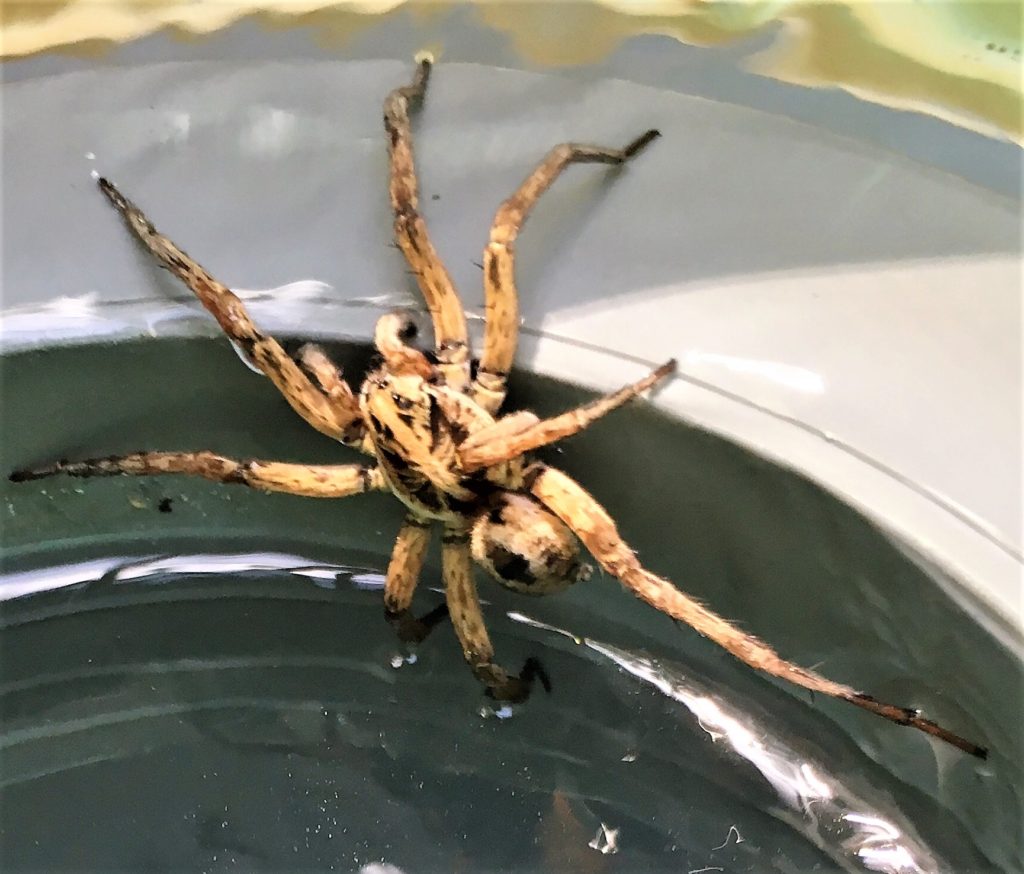
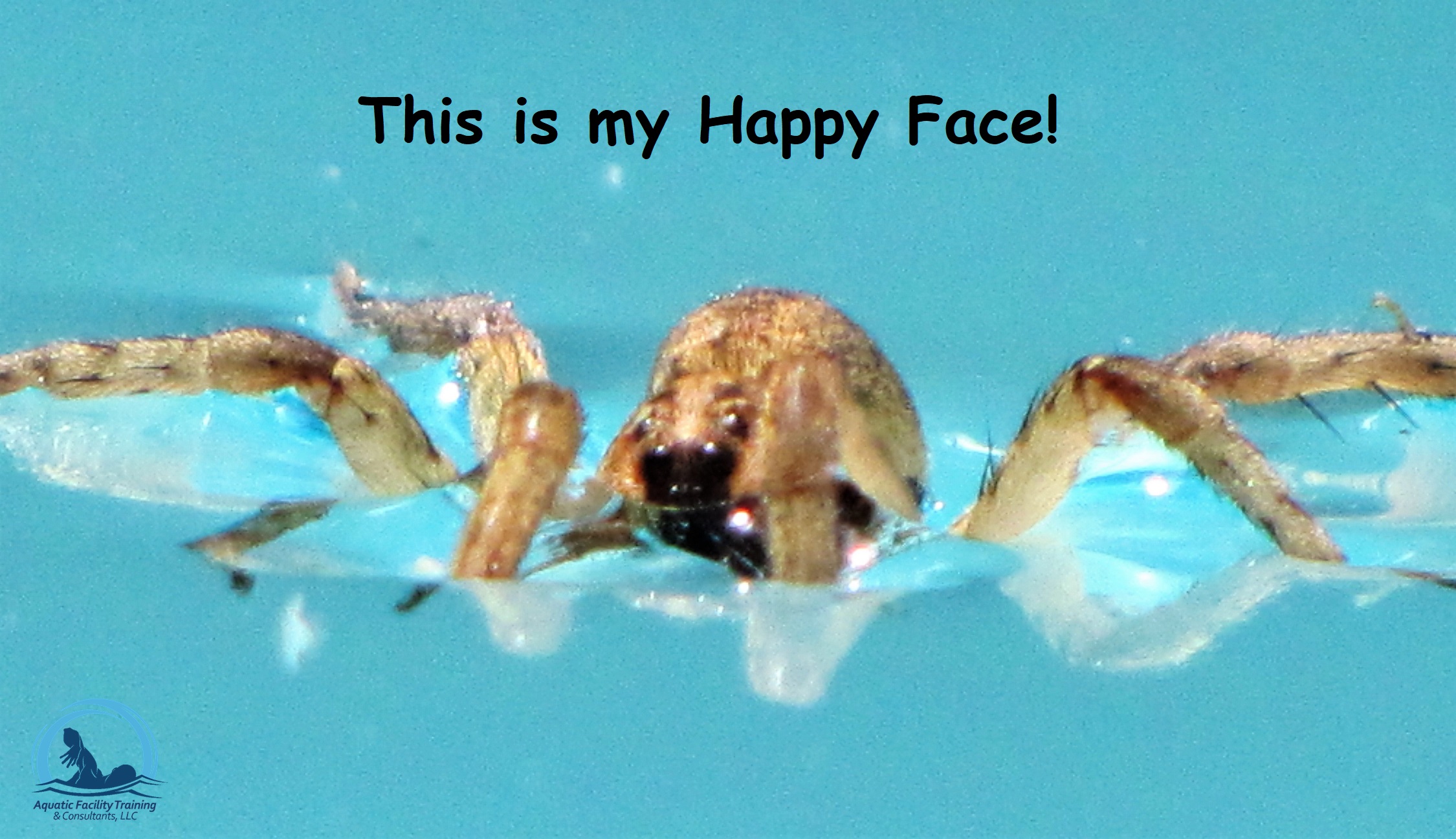
The Fishing Spider is not a swimming bug, it is an arachnid. Due to appearance, is often confused with the Wolf Spider. This diurnal hunter can often be seen skating across the tops of swimming pools and, at times, diving beneath the surface. This aquatic arachnid feeds upon insects, tadpoles, and fish. It is not uncommon for the Pool Operator to find one submersed in a skimmer basket. But, how can you tell if it’s a Wolf or a Six-spotted Fishing? That’s as easy as telling the difference between a “Happy Face” and a “Sad Face”: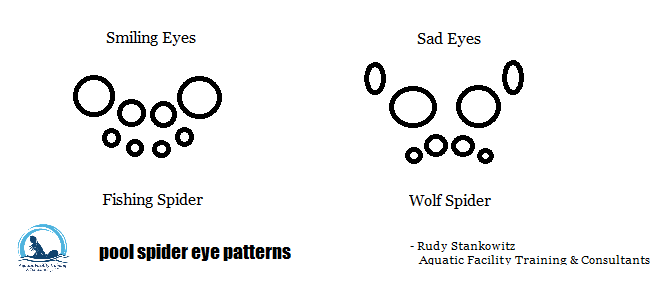

According to Spyderbytes, a blog dedicated to spiders, these predatory scuba divers (The six-spotted fishing spider) can “breath underwater” due to fine hairs upon their abdomens use to collect bubbles of air.
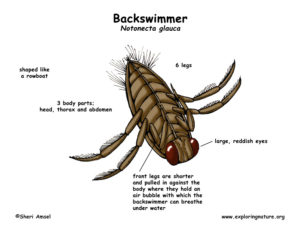

The backswimmer, as its name suggests, swims on its back. This predatory Hemiptera uses its long paddle-like rear legs to propel it through the water after prey. Its diet includes other aquatic insects, tadpoles, and fish. Sometimes referred to as a “water wasp,” this frequent visitor to swimming pools packs a painful sting. The backswimmer can breathe underwater by carrying an air bubble, which replenishes from the surface from time to time, on its body.
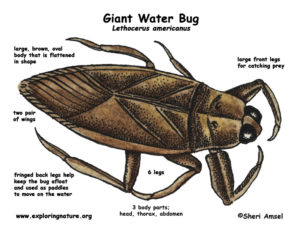
The Toe-biter (giant water bug) is the largest of the Hemiptera. This predator feeds on fish, frogs, small turtles, and snakes at over two inches long. According to Scientific American, Once they seize their prey, they inject their poisonous digestive juices. Occasionally, these aquatic giants will grab hold of a human toe and unleash a powerful bite. The Toe-biter can breathe underwater by carrying an air bubble, which replenishes from the surface from time to time, on its body.
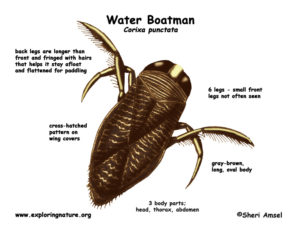
Water Boatmen primarily live off of algae and other aquatic vegetation, though some will feed upon mosquito larva. In an interview with Dailymail.com, James Windmill of the University of Strathclyde called the Boatman “the loudest animals on Earth” when referring to the sound they made compared to their small size.
Similar article 5 Secrets to Keeping Ducks out of Your Swimming Pool
They are often confused with Backswimmers but have no fear – these bugs do not bite people. The Water Boatman can breathe underwater by carrying an air bubble, which replenishes from the surface from time to time, on its body.

Belostomatidae (AKA: Eastern Toe Biters); In Florida, we call ’em “Alligator Fleas.”
A little dish soap goes a long way. Hydrogen atoms have a bit of a positive charge that makes water “sticky.” The hydrophobic portion of the dish soap forces these H2O molecules apart, reducing surface tension. By reducing surface tension, we actually make the water “wetter.” Bugs that normally scurry across the surface suddenly find that they no longer have the ability to float. Bugs that come to the surface for air suddenly can not breach the very surface.
A couple of squirts will do. Dishwashing soaps are phosphate-free nowadays, so you’ll not create a whole other problem in the process as long as you don’t overdo it (stay away from the antibacterial stuff). You’ll find quite a few commercially made products available for this purpose; I suppose putting “Water Bug Repellant” on a label vs. “Palmolive®” has more appeal in a pool store, but the supermarket dish soaps do come at a much lower cost. The dish soaps also make a great degreaser for cleaning your filter elements (though you could opt to kick it old school with some TSP for your filter cleaning).
Swimming pools often attract a variety of aquatic insects that homeowners commonly refer to as “swimming bugs” or “water bugs.” In reality, several different species can end up in pool water, including backswimmers, water boatmen, giant water bugs, and even spiders that hunt along the surface of the water. These insects are typically drawn to pools because they are attracted to standing water, lights at night, algae growth, or other small insects that become food sources. For pool owners and pool service professionals, understanding why bugs appear in swimming pools and how to eliminate them safely is an important part of maintaining a clean and sanitary swimming environment.

For professional pool operators, the appearance of aquatic insects can also signal underlying water chemistry or maintenance issues. Pools with algae growth, poor circulation, or insufficient sanitizer levels are far more likely to attract insects that feed on microscopic organisms or smaller aquatic life. Proper water balance, effective filtration, and maintaining adequate sanitizer levels are the most reliable long-term strategies for preventing insects from establishing themselves in swimming pools.
All diagrams used are with written permission from Sheri Amsel, www.exploringnature.org:
Missouri Department of Conservation
Video credit – Adventures of a Pool Girl