Pool Industry News Report: The Ruthenium Crisis and Why Salt Cells Are About to Get More Expensive
By Rudy Stankowitz
For decades, salt chlorination has been one of the great success stories of the swimming pool industry. In markets such as Australia and New Zealand, more than 90% of residential pools use saltwater chlorination systems. The United States has increasingly embraced the technology as homeowners seek lower-maintenance sanitation systems and a better swimming experience.
Now the industry faces a challenge few pool professionals have ever heard of: ruthenium.
According to Lee Fenton of AIS Water during a recent Talking Pools Mondays Down Under episode, the price of ruthenium—the rare platinum-group metal used to coat salt cell plates—has risen from roughly $400 per troy ounce in early 2025 to approximately $1,600 per ounce today.
Independent market data confirms the increase. Ruthenium prices reached approximately $1,600–$1,650 per ounce during the spring of 2026 after briefly touching $1,750 per ounce earlier this year.
For pool professionals, this matters because ruthenium is the heart of every modern reverse-polarity salt cell.

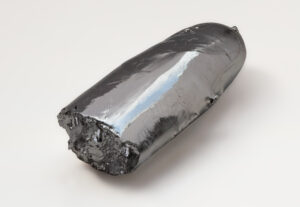
What Is Ruthenium?
Ruthenium is one of the platinum-group metals (PGMs), alongside platinum, palladium, rhodium, iridium, and osmium. It is used in:
- Semiconductor manufacturing
- Data storage devices
- Hard disk drives
- Advanced electronics
- Aerospace applications
- Industrial catalysts
- Saltwater chlorination cells
The unique electrochemical properties of ruthenium make it exceptionally effective at generating chlorine while resisting corrosion. Unfortunately, there is currently no commercially viable substitute that offers the same performance and longevity.
Why Are Prices Exploding?
Several separate events have collided at exactly the wrong time.
1. The AI Boom
One of the biggest drivers is artificial intelligence.
Modern data centers require enormous numbers of hard disk drives and storage systems. Ruthenium is used in magnetic storage technologies found in these drives. As companies race to build AI infrastructure, demand for ruthenium has surged dramatically. Reuters recently reported that AI-related demand is a primary reason ruthenium has reached record highs.
Simply put:
Every new AI data center competes with the pool industry for the same metal.
2. Russian Supply Constraints
Historically, Russia has been a major producer of platinum-group metals.
Following sanctions and geopolitical tensions, significant portions of Russian supply have become difficult or impossible for Western markets to access. This has removed a meaningful amount of material from global trade channels.
When supply shrinks and demand increases simultaneously, prices move upward rapidly.
3. Ruthenium Is a Byproduct
Unlike copper, gold, or iron, ruthenium is rarely mined as a primary metal.
Instead, it is recovered as a byproduct during platinum and nickel production.
That means mining companies cannot simply decide to produce more ruthenium next month.
The supply is largely dependent on the overall economics of platinum-group metal mining.


The South African Connection
This is where South Africa enters the story.
South Africa dominates global platinum-group metal production and possesses the world’s largest concentration of PGM reserves in the Bushveld Complex. The country is the largest producer of platinum, rhodium, iridium, and ruthenium on Earth.
When pool professionals talk about the future price of salt cells, they are indirectly talking about what happens in South African mining operations.
PMG / PGM Mining Operations
The major platinum-group metal mining operations in South Africa extract ore from the Bushveld Complex, one of the richest mineral deposits ever discovered.
Companies operating there include:
- Platinum Group Metals Ltd.
- Northam Platinum
- Valterra Platinum
The Waterberg Project being advanced by Platinum Group Metals is viewed as one of the significant future PGM developments in South Africa.
However, there is a catch.
Building new platinum-group metal mines takes years, sometimes decades.
Even though platinum prices have improved dramatically and mining companies are generating stronger profits, many executives remain hesitant to launch major new projects due to high capital costs and uncertainty about long-term metal prices.
That means additional ruthenium supply is unlikely to arrive quickly.
When Will Pool Pros in the U.S. Feel the Impact?
The answer is: many already are.
Manufacturers typically purchase raw materials months before products reach distributors.
The sequence looks something like this:
- Ruthenium price rises.
- Cell manufacturers absorb the increase temporarily.
- Inventory purchased at old prices gets depleted.
- New production runs use higher-cost ruthenium.
- Distributor pricing increases.
- Retail and service companies adjust pricing.
- Pool owners finally see the increase.
Most manufacturers have already experienced the higher ruthenium costs throughout 2025 and early 2026.
For the U.S. market, the most significant retail impacts are likely to appear between summer 2026 and early 2027 as older inventories are exhausted and replacement cells manufactured with higher-cost ruthenium become the norm.
In other words:
If a pool owner needs a replacement cell today, it may already cost more than expected.
If they wait another year, it may cost considerably more.
Could Prices Come Back Down?
Possibly.
But several conditions would need to occur simultaneously:
- Increased South African PGM production
- Greater availability of Russian material
- Reduced AI-related demand
- New ruthenium recycling capacity
- Discovery of an effective alternative coating technology
At the moment, none of those factors appear likely to produce a major near-term correction. Analysts continue to describe ruthenium supply as structurally constrained.
What Should Pool Professionals Do?
The immediate takeaway is not panic.
It is preparation.
Pool service companies should expect:
- Higher replacement cell costs
- Longer customer conversations about pricing
- Increased emphasis on maintaining proper salt levels
- Greater focus on extending cell life
Ironically, maintaining proper salinity may become more important than ever. Running a cell at low salt levels forces it to work harder and can significantly reduce its lifespan, making an already expensive replacement even more costly.
For years, salt cells were viewed as a mature, stable technology.
Today, they have become tied to global politics, artificial intelligence infrastructure, South African platinum mining, and one of the rarest industrial metals on Earth.
That’s not a sentence many pool professionals expected to read in 2026.
Related Posts