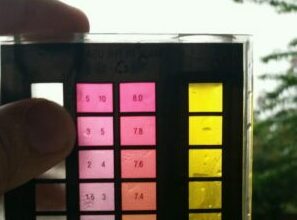

One of the primary responsibilities of a Certified Pool Operator (CPO) is to maintain not just proper swimming pool water chemistry but also safe water chemistry. Balanced water chemistry is essential for maintaining effective sanitation, protecting pool equipment, and ensuring swimmer comfort.
Swimming pools are dynamic aquatic environments in which contaminants are constantly introduced by swimmers, environmental debris, and chemical additions. Without proper monitoring and adjustment, these factors can quickly destabilize water chemistry and reduce disinfection effectiveness.
Certified Pool Operators routinely test and manage several key chemical parameters that influence water quality and sanitation performance.
These include:
-
Free chlorine
-
pH
-
Total alkalinity
-
Calcium hardness
-
Cyanuric acid
Each of these parameters plays a specific role in maintaining safe and stable pool waterFree Chlorine and Disinfection
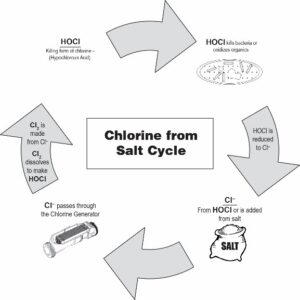
Free chlorine is the primary disinfectant used in most swimming pools worldwide. When chlorine is added to water, it forms hypochlorous acid (HOCl) and hypochlorite ion (OCl⁻).
Hypochlorous acid is the most effective antimicrobial form of chlorine and is responsible for inactivating bacteria, viruses, and many other microorganisms present in recreational water.
Extensive research in drinking water and recreational water treatment has demonstrated the effectiveness of chlorine-based disinfection. Hypochlorous acid is a strong oxidizing agent that disrupts cellular structures and metabolic processes in microorganisms (White, Handbook of Chlorination and Alternative Disinfectants).
Maintaining an adequate concentration of free chlorine allows operators to rapidly inactivate pathogens introduced by swimmers, helping prevent the spread of recreational water illnesses.
pH and Chlorine Effectiveness
The pH of pool water plays a critical role in determining how effective chlorine will be as a disinfectant.
The equilibrium between hypochlorous acid and hypochlorite ion is strongly influenced by pH. At lower pH values, a larger proportion of chlorine exists as hypochlorous acid, the more powerful disinfectant.
As pH increases, a greater portion converts to hypochlorite ion, which is significantly less effective at microbial inactivation.
For this reason, maintaining pH within recommended operating ranges is essential for maximizing chlorine’s sanitizing performance. The relationship between pH and chlorine speciation has been extensively described in water treatment chemistry literature and is a core concept taught in pool operator training.
Total Alkalinity and Water Stability
Total alkalinity represents the buffering capacity of pool water and is primarily controlled by bicarbonate ions.
Buffering systems help stabilize pH by resisting rapid changes caused by chemical additions, environmental contamination, or carbon dioxide exchange with the atmosphere.
When alkalinity is too low, pool water may experience rapid and unpredictable pH swings. When alkalinity is excessively high, pH becomes difficult to adjust, and scaling conditions may develop.
Proper alkalinity management helps maintain stable water chemistry and supports predictable pH control.
Calcium Hardness and Surface Protection
Calcium hardness refers to the concentration of dissolved calcium ions in pool water.
Calcium plays an important role in maintaining equilibrium between the water and cement-based pool surfaces such as plaster, grout, and concrete.
If calcium levels are too low, water can become aggressive and dissolve calcium compounds from pool surfaces, potentially causing surface degradation.
Conversely, excessively high calcium concentrations can contribute to scale formation on pool surfaces, plumbing, and heaters.
Water balance calculations, including indices such as the Langelier Saturation Index, are commonly used by operators to help determine whether water conditions favor corrosion or scale formation.
Cyanuric Acid and Chlorine Protection
Cyanuric acid is commonly used in outdoor pools as a stabilizer to protect chlorine from degradation by ultraviolet radiation from sunlight.
Without stabilization, chlorine exposed to direct sunlight can degrade rapidly through photochemical reactions.
Research has shown that cyanuric acid forms weak reversible complexes with chlorine species, reducing the rate of ultraviolet photodecomposition while still allowing chlorine to remain available for sanitation (Wojtowicz, Journal of the Swimming Pool and Spa Industry).
Maintaining appropriate cyanuric acid levels helps preserve chlorine effectiveness in outdoor pools while avoiding excessive stabilization that could slow disinfection kinetics.
Similar Article Peeing in Pools: The Chemical Reactions
The Consequences of Poor Water Balance
Improper water chemistry can create several operational problems for swimming pools.
Water that is chemically imbalanced may lead to:
Scaling on surfaces and equipment
Corrosion of metal components
Cloudy water conditions
Reduced disinfectant effectiveness
Swimmer eye and skin irritation
Maintaining balanced water chemistry allows Certified Pool Operators to preserve both water clarity and sanitation performance while protecting pool infrastructure from long-term damage.
Why Water Chemistry Management Matters
Safe swimming pool operation depends on the careful interaction between chemistry, hydraulics, and filtration. Even when filtration and circulation systems are functioning properly, sanitation failures can occur if chemical balance is not maintained.
For this reason, water chemistry monitoring and adjustment remain one of the most critical responsibilities of a Certified Pool Operator.
Understanding these chemical relationships is a fundamental part of CPO certification training, ensuring that pool operators can maintain water that is not only clear, but also safe for public use.
References
White, G. C. Handbook of Chlorination and Alternative Disinfectants. Wiley.
Wojtowicz, J. A. Chlorine Stabilization Chemistry. Journal of the Swimming Pool and Spa Industry.
Centers for Disease Control and Prevention. Model Aquatic Health Code.
World Health Organization. Guidelines for Safe Recreational Water Environments.