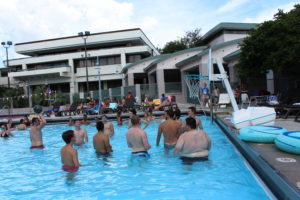


Florida State University Aquatics
There is a lot more to consider when maintaining these colossal giants of competition and wellness than one might think. Pool Operators face a myriad of challenges beyond balancing the mega-gallonage at a body of water that serves as a recreational, fitness, and sports venue. If you recall, in September, we spoke with the University of Georgia’s Alex Nichols. This month, Florida State University’s Aquatics Coordinator, Lizzie Milkas, joins us to discuss some of the intricacies of operating a collegiate swimming pool. Here is what Lizzie had to say:
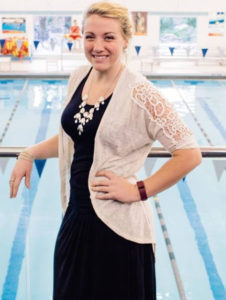
Aquatics Coordinator
FSU Campus Recreation
A college campus transforms during the summer time. Students go home, academic classes are reduced, and everyone is eager to learn to swim. During the summer, FSU’s Campus Recreation Center hosts swim lessons every day for 8 weeks and every Saturday.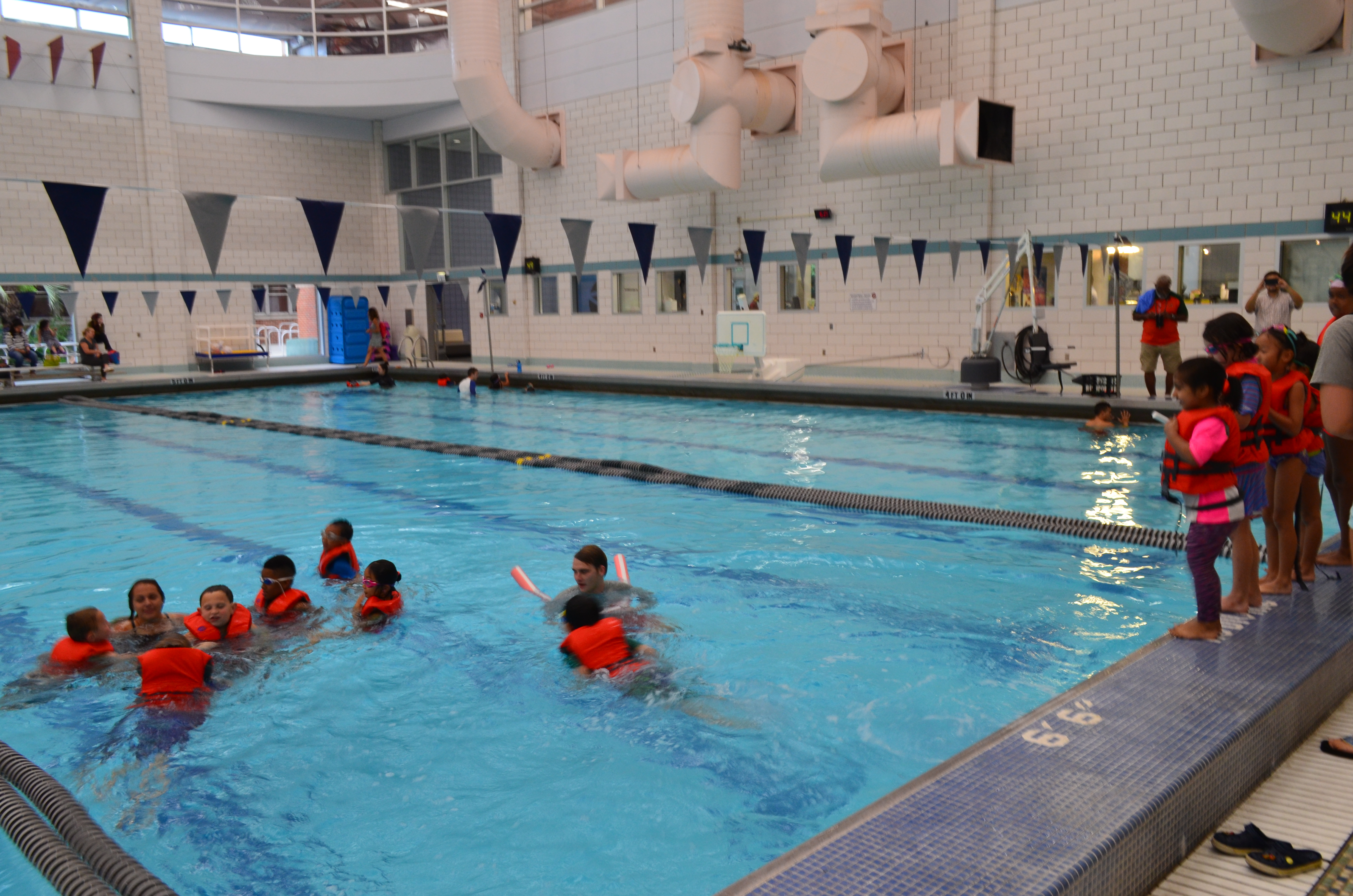
In addition to swim lessons and lifeguarding at the Leach the aquatics staff operates the waterfront facility known as the Rez. Starting at 8am every day, eight lifeguards work between the Rez and Leach, continuing until 5pm. The Rez is home to our summer camp, Camp Flastacowo.
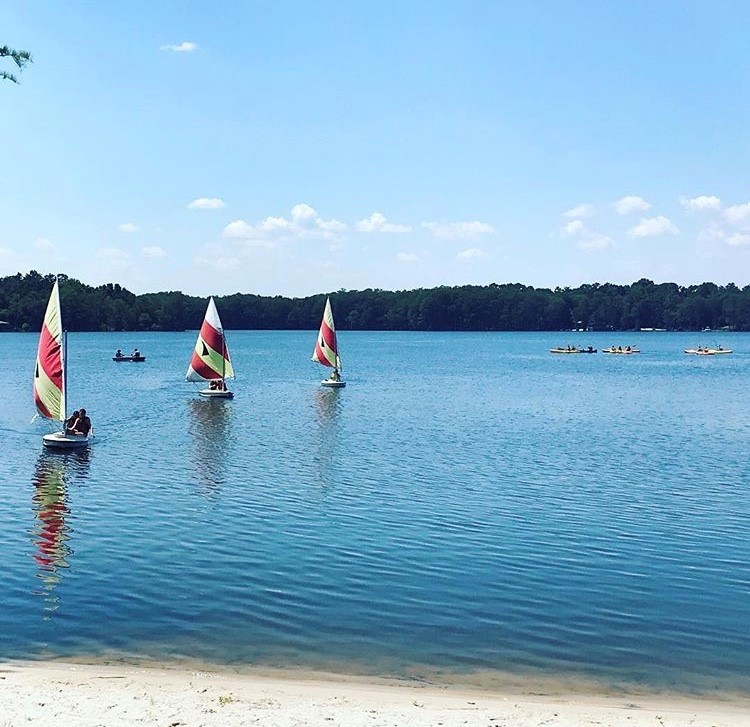
The campers are in the water first thing, learning lifelong skills, and the lifeguards are there ensuring their safety. At 5 pm, we begin getting ready for our swim lessons at the Leach, bringing in anywhere from 12 to 16 instructors and an additional lifeguard. Between 5 pm and 7 pm on weekdays, we could have up to 25 employees working across our two sites.
A major challenge is not having quite enough staff during the summer, stemming from a multitude of reasons. Many of the lifeguards go home for the summer because they are not taking classes. Some go home because their on-campus housing has closed, and they have to. Finally, others go home because they know they can make more money at the pools back home. Ultimately, we struggle with the burnout that comes with the same amazing 40ish staff having to work over 415 hours every week
Operating large aquatic facilities such as those found on college campuses requires more than simply balancing water chemistry. Aquatics coordinators and pool operators must understand public health codes, risk management, lifeguard supervision, circulation system performance, sanitation requirements, and emergency protocols. This is why professional training, such as the Certified Pool Operator (CPO) certification, has become an essential credential for aquatic professionals responsible for public and semi-public pools. Through structured education, pool operators learn the science behind water chemistry, filtration, disinfection, and facility management, while also gaining an understanding of the regulatory requirements that govern aquatic venues across the United States. Programs such as the CPO classes offered through CPOClass.com help prepare aquatics staff, facility managers, and maintenance teams to safely operate everything from municipal pools and university aquatic centers to waterparks and competitive swimming facilities.
To see what the University of Georgia’s Director of Aquatics, Alex Nichols, had to say on the subject in last month’s Spotlight: University of Georgia Aquatics