
University of Georgia Aquatics
There is a lot more to consider when maintaining these colossal giants of competition and wellness than one might think. Pool Operators face a myriad of challenges beyond balancing the mega-gallonage at a body of water that serves as a recreational, fitness, and sports venue. If you recall, in August, we spoke with Duke University’s Abi Schaefer. This month, University of Georgia’s Director of Aquatics, Alex Nichols, joins us to discuss some of the intricacies of operating a collegiate swimming pool. Here is what Alex had to say:

Aquatics Director
University of Georgia
I think the greatest challenge facing us at the University of Georgia is finding a way to meet the space and time needs of all of our patrons and user groups. We see anywhere from 400 to 750 users in the natatorium on any given day, and each person has a different idea of what their experience should be. Our core values at UGA Recreational Sports are geared towards providing opportunities for everyone and making sure everyone feels welcome. It has been my mission over the last 5 years to figure out how to achieve that goal in the natatorium, but it remains a struggle.
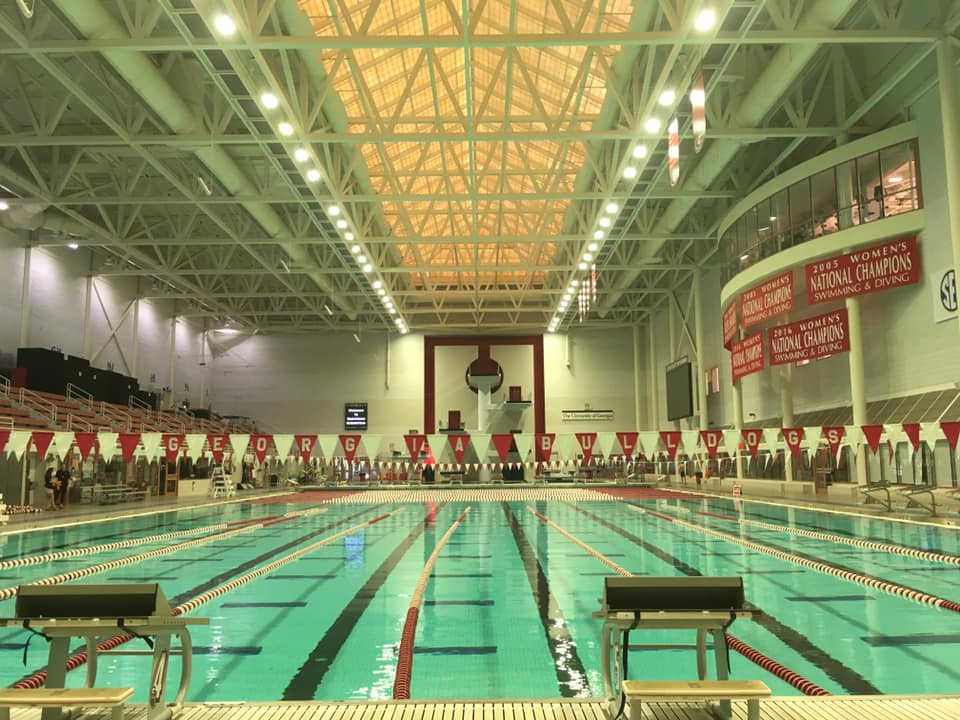
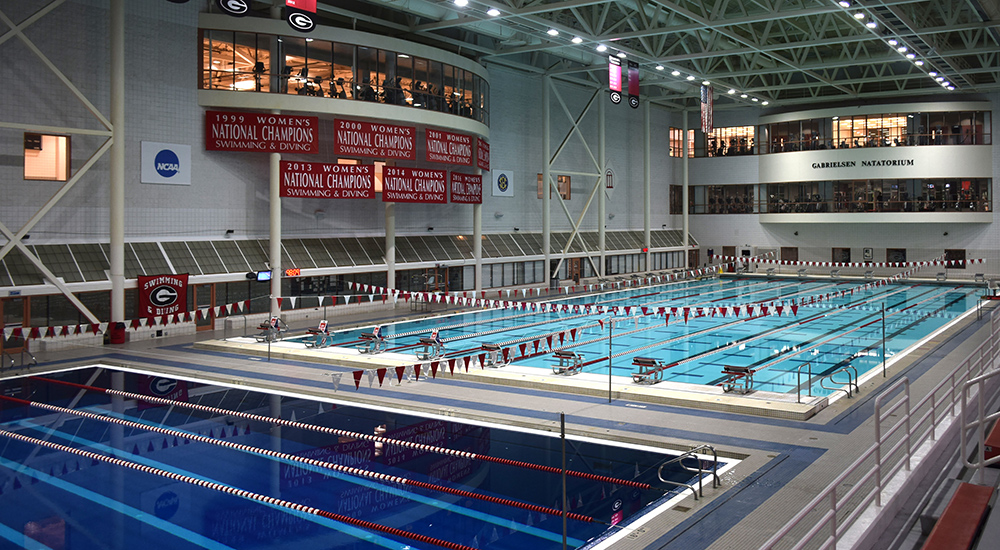
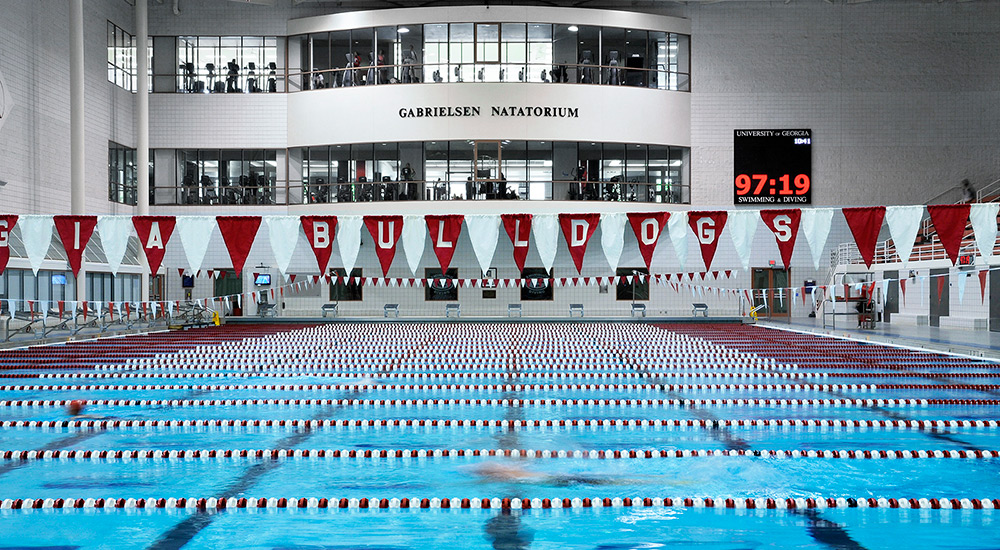
Our facility is set up as a competition facility with a 50-meter pool, a separate Dive Well, and an 8-lane recreation pool. We are the home to UGA Swimming and Diving for all practices and competitions, so we have to be mindful of their schedule when working with our other user groups. Our biggest group of users outside of UGA Swimming/Diving is our recreational swimmers. In this group, we have patrons who are just getting into swimming and looking to become comfortable in the water, as well as those who have swum their entire lives competitively and are looking to continue at that level. Lane space is always at a premium during recreational swim times. In a perfect world, we could open the entire 50-meter pool for this, but we have other groups to consider. Even within this group, the swimmers have different expectations. Those who are new to swimming may not be comfortable in a deeper pool, so we have to be mindful of when and in which pool we offer recreational swimming.
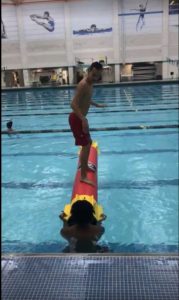
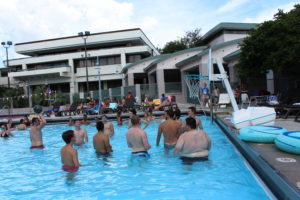
We also see a lot of use from the other areas within our department and around campus. For example, Outdoor Recreation has many clinics and classes that we partner with them to offer. These range from kayak roll clinics to scuba courses for the UGA community. Our Competitive Sports team also seeks to offer opportunities for our students through club sports, intramural seasons, and/or tournaments. These students have just as much of a right to participate as everyone else, and it is a juggling act to make sure we are meeting their needs as well. This often results in each pool being split between 2-4 user groups at any given time. This split can also include Kinesiology classes, outside rental groups, and specialty groups such as ROTC and the FBI.
 I have yet to mention our own Aquatics programs, which are also an important part of the puzzle. We offer private, semi-private, and group swim lessons along with American Red Cross Lifeguarding courses. These are important to us in terms of revenue generation and providing life-saving skills to the UGA and Athens communities. As anyone who offers these as part of their program can tell you, time and space are paramount for making these programs successful. Now add them to the other space requests, and things get interesting.
Every year, we get more and more groups requesting time and space, so this problem will only continue. All we can do is remember our values and work towards providing opportunities for everyone who wants to use our amazing facility.
Operating a large collegiate aquatic facility, such as those at the University of Georgia, requires far more than simply maintaining water chemistry. Aquatic directors and facility managers must oversee complex schedules, ensure swimmer safety, maintain filtration and disinfection systems, and comply with local health department regulations governing commercial pools. For this reason, many universities and municipal aquatic facilities require staff to complete Certified Pool Operator (CPO) certification training, which provides formal education in pool water chemistry, circulation systems, sanitation, and regulatory compliance. Professional CPO classes, such as those offered through CPOClass.com, help pool operators understand the science behind water treatment and the operational responsibilities required to keep high-volume aquatic facilities safe, balanced, and functioning efficiently. In environments where hundreds of swimmers may enter the water each day, properly trained pool operators play a critical role in protecting both public health and the facility’s reputation.
To see what Duke University’s Director of Aquatics, Abi Schaefer, had to say on the subject in last month’s Spotlight: Duke University Aquatics
[ratings]