
Understanding Indoor Pool Smells
Understanding Chloramines, Combined Chlorine, and Breakpoint Chlorination
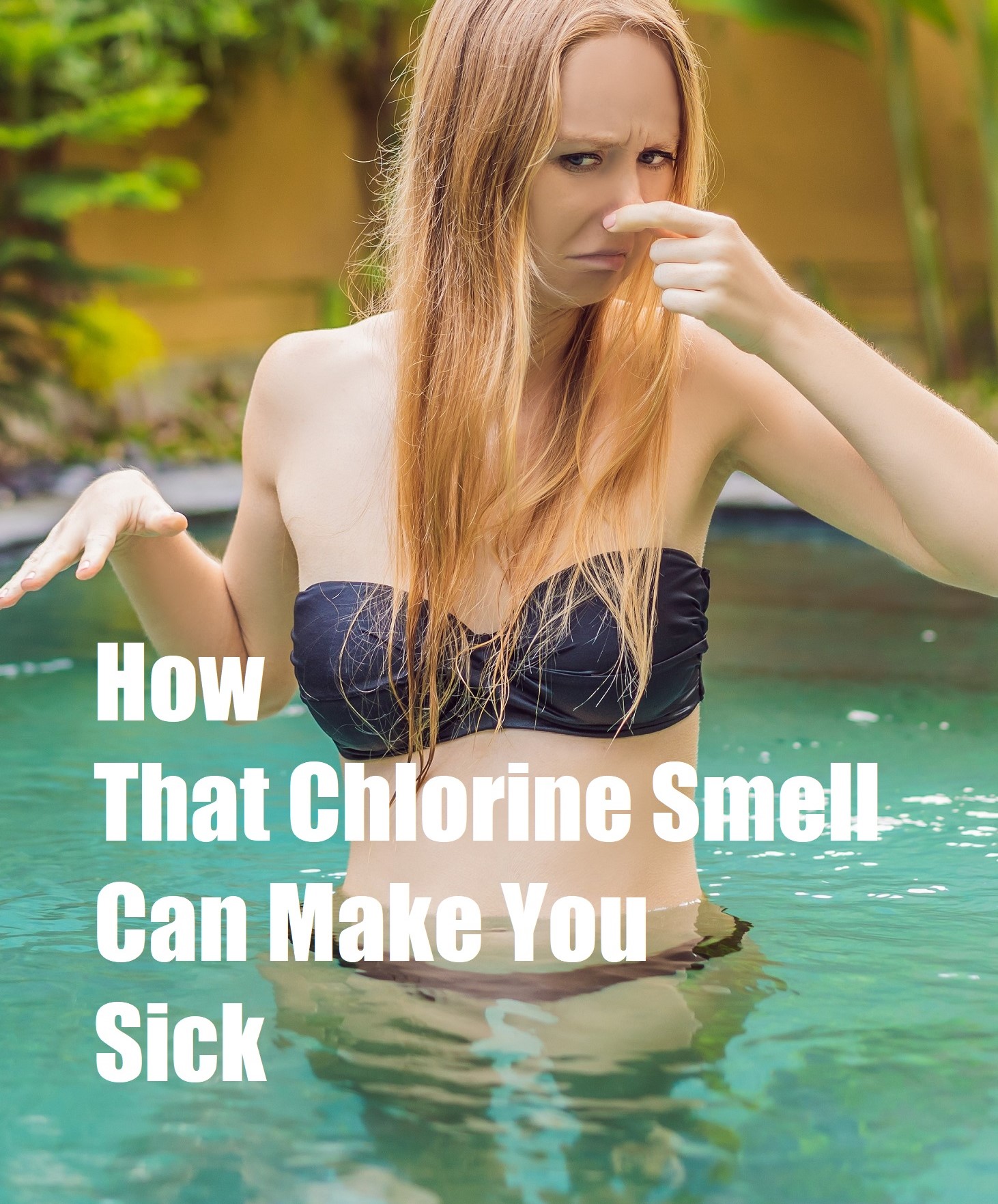
Have you ever walked into an indoor swimming pool facility and immediately noticed a sharp “chlorine smell” in the air? For many people, the reaction is instant—burning eyes, irritated sinuses, and sometimes even coughing.
Ironically, that odor is not a sign of too much chlorine.
In most cases, the smell indicates the presence of chloramines, which are chemical by-products formed when chlorine reacts with nitrogen-containing contaminants introduced by swimmers. Research published in environmental health and aquatic facility studies consistently identifies chloramines as the primary cause of the strong odor and irritation commonly associated with poorly managed indoor pool environments.
The Chemistry Behind the “Chlorine Smell”
When chlorine is added to water—whether in the form of sodium hypochlorite, calcium hypochlorite, lithium hypochlorite, or chlorine gas—it forms hypochlorous acid (HOCl) and the hypochlorite ion (OCl⁻) in equilibrium. These species collectively represent free chlorine, the active disinfectant that destroys pathogens in swimming pools.
Free chlorine is essential for maintaining safe recreational water. The U.S. Centers for Disease Control and Prevention (CDC) and the World Health Organization (WHO) both identify chlorine-based disinfectants as the most effective and widely used method for controlling microbial contamination in pools and spas.
However, free chlorine also reacts with nitrogen-containing organic compounds introduced by swimmers. These contaminants include:
-
Sweat
-
Urine
-
Skin cells
-
Personal care products
-
Environmental debris such as fertilizers or plant material
When chlorine reacts with these nitrogen sources, it forms chloramines, also known as combined chlorine. The primary chloramines formed in pool environments include:
-
Monochloramine (NH₂Cl)
-
Dichloramine (NHCl₂)
-
Trichloramine (nitrogen trichloride, NCl₃)
Peer-reviewed research has shown that trichloramine (NCl₃) is largely responsible for the strong odor and respiratory irritation commonly reported in indoor pool facilities.
Studies published in journals such as Environmental Science & Technology and Water Research demonstrate that elevated trichloramine concentrations in natatorium air can cause eye irritation, coughing, and respiratory discomfort in swimmers and facility staff.
Similar Article Bromate from Bromine
In other words:
Understanding Indoor Pool Smells
That “chlorine smell” is actually evidence that chlorine has already reacted with contaminants.
It is a sign that the disinfectant is being consumed faster than it is being properly managed.
Indoor Pools and Air Quality
The problem is particularly noticeable in indoor pools, where air exchange may be limited. Without adequate ventilation, volatile chloramines—especially trichloramine—can accumulate in the air just above the water surface.
Research conducted in European natatoriums has shown that trichloramine levels are often highest in the first meter above the water surface, exactly where swimmers and lifeguards breathe.
This is why modern natatorium design includes ventilation systems specifically engineered to remove chloramine-laden air from the deck level and replace it with fresh air.
Organizations such as ASHRAE (American Society of Heating, Refrigerating, and Air-Conditioning Engineers) provide design standards to help aquatic facilities maintain proper indoor air quality.
Breakpoint Chlorination: Eliminating Combined Chlorine
One of the most widely recognized methods for removing chloramines from pool water is breakpoint chlorination.
Breakpoint chlorination occurs when sufficient chlorine is added to completely oxidize ammonia and nitrogen-containing compounds, converting them primarily into nitrogen gas, chloride ions, and other harmless by-products.
The relationship between chlorine and ammonia during this oxidation process has been studied extensively in water treatment science. Research dating back to the early work of Palin (1957) describes the breakpoint curve and the characteristic chlorine demand required to eliminate combined chlorine.
Operationally, pool operators often use a practical guideline derived from this chemistry.
For breakpoint chlorination, the chlorine dose is typically calculated as approximately 10 times the measured combined chlorine concentration.
For example:
If a pool test shows:
Combined Chlorine = 0.5 ppm
The theoretical breakpoint dose would be approximately:
0.5 × 10 = 5 ppm of additional free chlorine
This chlorine is added all at once, not gradually, while the circulation system remains running to ensure proper mixing.
It is important to understand that breakpoint chlorination is not simply “adding more chlorine.”
It is a controlled oxidation process designed to destroy chloramines and restore effective sanitation.
Choosing the Correct Chlorine Source
When performing breakpoint chlorination, operators should use unstabilized chlorine sources, such as:
-
Sodium hypochlorite
-
Calcium hypochlorite
-
Lithium hypochlorite
Using stabilized chlorines like dichlor or trichlor during breakpoint chlorination can introduce large amounts of cyanuric acid (CYA) into the water. Elevated cyanuric acid levels can reduce the effectiveness of free chlorine and complicate overall water balance.
Proper chlorine selection and dosing are therefore essential components of professional pool operator training.
Why Testing Matters
Maintaining safe swimming pool water depends on accurate testing and interpretation of results.
Professional pool operators routinely monitor:
-
Free chlorine
-
Combined chlorine
-
pH
-
Total alkalinity
-
Cyanuric acid
-
Calcium hardness
High-quality analytical methods, such as the DPD-FAS titration method, provide accurate measurements of both free and combined chlorine levels and are widely used in professional water-testing kits.
Consistent monitoring enables operators to detect rising combined chlorine levels early and address them before they cause discomfort to swimmers or indoor air quality problems.
The Role of Education in Pool Water Management
Understanding the chemistry behind chloramines and breakpoint chlorination is a critical component of Certified Pool Operator (CPO) training and other professional aquatic facility education programs.
Effective pool management requires more than simply adding chemicals. It requires understanding how disinfectants interact with contaminants, how ventilation affects indoor air quality, and how operational decisions influence swimmer health and comfort.
For pool operators, facility managers, and aquatic professionals, this knowledge directly impacts:
-
Swimmer safety
-
Indoor air quality
-
Regulatory compliance
-
Operational efficiency
And perhaps most importantly, it improves the overall swimming experience.
As Olympic Gold Medalist Summer Sanders once said in a discussion about competitive swimming and pool water quality:
“The better we understand the chemistry between healthy pool water and healthy kids, the happier we will be and the faster our kids will swim!”
— Summer Sanders, Olympic Gold Medalist, 1992 Barcelona
Selected Research Supporting These Principles
Key scientific studies on chloramines and indoor pool chemistry include research published in journals such as:
-
Environmental Science & Technology
-
Water Research
-
Journal of Environmental Monitoring
-
Indoor Air
Researchers, including Bernard et al., Blatchley et al., and Weng et al., have extensively studied chloramine formation, trichloramine exposure, and ventilation requirements in indoor pools.
These studies consistently confirm that:
-
Chloramines form when chlorine reacts with nitrogen compounds introduced by swimmers.
-
Trichloramine is the primary cause of the characteristic “chlorine smell.”
-
Proper oxidation and ventilation significantly reduce irritation and improve air quality.


















great points and information
I have, some pools are worse than others but most seem to be alright smell wise. One of our local parks smells strongly of chlorine but there I don’t mind because the water gets cycled and spit back out at the splash zone.
I actually enjoy the smell of chlorine. It smells like nostalgia! lol But the fact that it can be bad makes sense.
That’s a very informative article. Thanks for sharing, and so true about the Chrlorine smell
Thank you for this useful information.
Great information! You’re right, it makes sense. It can be dangerous.
I need to share this with my brother, he works in a pool facility!
Great information! My oldest kiddo is a lifeguard, this is definitely something he should read
I never knew it made people sick – I LOVE the smell of chlorine for some reason haha
I hate the chlorine smell too! and now I know why I can’t stand it.
Your ending was the best- listen to your parents! Kids need that reminder 🙂
You spoke my mind! Chlorine smell in pools disgusts me.
The smell of chlorine is one of the reasons I don’t like the pool. Besides, the chlorine also irritates my eyes. While my kids and husband enjoy the pool. I just sit and read.
Managing chlorine in swimming pools is very important. Every needs to be aware of the best practices.
I hate chlorine smell…specially in my hair. Yuck!!
Woah, I never minded the smell of chlorine as a child. I love swimming everywhere especially in the summer
Wow, I didn’t know chlorine would actually make people sick. There were plenty of times when I walked into an indoor pool where the smell was overpowering. I figured it meant the pool was “extra clean.” This was a very insightful post!
*Samantha- http://www.herjournalblog.com
I’ve been in those indoor pools where the chlorine smell was awful. Thanks for letting me know what to do in those types of situations and for explaining it in an easy to read manner.
Thanks for explaining how to avoid this. Although it always baffles me when you go to a business and the chlorine is unbearable because they should know what they are doing
we have a pool so this is great to know we use salt water though.