

Morphological characterization of Cyanobacteria-dominated black algae Swimming Pool Biofilms in three Florida swimming pools, conducted in 2018, is the first documentation of how cyanobacterial constituents in swimming pool black algae biofilms vary by geographic location.
Rudy Stankowitz
Aquatic Facility Training and Consultants, Archer, Florida, USA
Cyanobacteria-dominated black algae are a concerning issue for pool hygiene and maintenance.
Corresponding author: Rudy Stankowitz, rudy@pooloperatorcourse.com
Abstract
Dark, surface-associated growths commonly called black algae are persistent in chlorinated swimming pools. However, their microbial composition has received limited pool-specific study. This exploratory case series characterized specimens collected during 2018 from three Florida swimming pools: two in Gainesville and one in Atlantic Beach. Wet-mount light microscopy, phase-contrast microscopy, and epifluorescence were used for morphology-based screening.
The study focused on the impact of Cyanobacteria-dominated black algae in chlorinated swimming pools.
Understanding the presence of cyanobacteria found in U.S. swimming pools is critical for effective pool management.
Understanding the impact of Cyanobacteria-dominated black algae Swimming Pool Black Algae Biofilms is critical for effective pool management. Cyanobacteria-dominated black algae Swimming Pool Black Algae Biofilms pose significant challenges for pool operators and can affect water quality.
Keywords: cyanobacteria; swimming pool; black algae; biofilm; Leptolyngbya; Oscillatoria; Microcoleus; Nostoc; Synechococcus; microcystin
Introduction to Morphological characterization of cyanobacteria-dominated black algae biofilms in three Florida swimming pools
Addressing the threats posed by Cyanobacteria-dominated Swimming Pool Black Algae Biofilms requires a thorough understanding of their ecology and the strategies for their management.
In recent years, concerns have grown regarding the cyanobacteria found in U.S. swimming pools, especially due to their implications for health and safety.
Addressing the challenges posed by Cyanobacteria-dominated black algae is important for enhancing recreational water safety.
The term black algae is widely used in swimming-pool operations for dark, adherent colonies that recur on submerged surfaces despite routine disinfection. This term is biologically imprecise because cyanobacteria are photosynthetic prokaryotes rather than eukaryotic algae. Cyanobacteria and other phototrophs can grow within extracellular polymeric substance matrices. As a result, the biofilm architecture can increase attachment, retain water and nutrients, and limit the penetration or activity of antimicrobial agents [1-4].
Identifying the cyanobacteria found in U.S. swimming pools can help in developing better treatment strategies.
Effective management of Cyanobacteria-dominated black algae requires ongoing research and monitoring.
Effective treatment options are essential for controlling Cyanobacteria-dominated Swimming Pool Black Algae Biofilms and reducing their impact on recreational water quality.
Pool-specific characterization has historically been sparse. Lewin described organisms referred to as black algae in applied settings [5], and recent studies have shown that pigmented areas on swimming-pool coatings may contain mixed phototrophic biofilms [6]. Christie-Oleza and colleagues analyzed black-algae biofilms from 15 swimming pools in Mallorca, Spain using community analysis, cultivation, and genomic methods. They confirmed that these growths can contain diverse cyanobacterial taxa and possess mechanisms relevant to persistence [7].
It is important to examine the cyanobacteria found in U.S. swimming pools to mitigate health risks associated with these biofilms.
Awareness about Cyanobacteria-dominated Swimming Pool Black Algae Biofilms is essential for both pool managers and users to ensure safe swimming conditions.
In 2018, an applied field investigation was undertaken after persistent dark colonies of Cyanobacteria-dominated black algae were encountered in Florida swimming pools.
The study focused on the cyanobacteria found in U.S. swimming pools and their environmental adaptations.
The investigation focused on the characteristics of Cyanobacteria-dominated black algae found in U.S. swimming pools.
Research on Cyanobacteria-dominated Swimming Pool Black Algae Biofilms is vital for developing effective control methods to maintain swimming pool hygiene.
Materials and Methods
Ss=”rank-math-highlight” style=”background-color: #fee894″>Sampling techniques were developed specifically for detecting cyanobacteria found in U.S. swimming pools.
Study design and sites
This was an exploratory observational case series involving convenience samples from three chlorinated swimming pools in Florida during 2018. To preserve facility confidentiality, the sites are designated Gainesville A, Atlantic Beach, and Gainesville B. Gainesville B was located within approximately 1 mile of Gainesville A; Atlantic Beach was less than approximately 100 miles from Gainesville. The study was not designed to estimate prevalence or establish causal associations.
Understanding the prevalence of Cyanobacteria-dominated black algae Swimming Pool Black Algae Biofilms in various environments can inform better management practices.
These sites were chosen based on the known presence of cyanobacteria found in U.S. swimming pools.
The identification of Cyanobacteria-dominated Swimming Pool Black Algae Biofilms can lead to improved strategies for their control in chlorinated environments.Cyanobacteria-dominated Swimming Pool Black Algae Biofilms may influence the ecological dynamics of aquatic systems, necessitating further study.
The identification of Cyanobacteria-dominated black algae can lead to improved strategies for their control in chlorinated environments.
Cyanobacteria-dominated black algae are often misidentified, leading to ineffective treatment strategies.The presence of Cyanobacteria-dominated black algae raises concerns about potential health risks in swimming environments.
| Site | Sampling period | Specimen source | Documented analytical work |
| Gainesville A | 2018 | Dark adherent surface colonies | Preservation in Lugol iodine; light microscopy; morphology-based identification |
| Atlantic Beach | 2018 | Dark surface-associated biomass collected before treatment | Field collection and laboratory wet-mount microscopy; community-level morphological description |
| Gainesville B | November 1, 2018 | Dark surface-associated biomass from an operating pool | PTOX microscopy screen; phase contrast; epifluorescence; ELISA for microcystins/nodularins |
The study of Cyanobacteria-dominated black algae Swimming Pool Black Algae Biofilms provides insights into their ecological roles and potential health risks.
Sampling and handling Cyanobacteria Found in U.S. Swimming Pools
It is crucial to understand how to handle and sample cyanobacteria found in U.S. swimming pools.
Understanding how to effectively manage Cyanobacteria-dominated black algae is crucial for maintaining pool hygiene.
Proper sampling and identification of Cyanobacteria-dominated Swimming Pool Black Algae Biofilms are crucial for implementing effective control measures.
Gainesville A specimens were removed from visibly colonized submerged surfaces and preserved in Lugol iodine for microscopy. Atlantic Beach specimens were collected by Fred Singleton, PhD, and transferred for laboratory examination. Gainesville B biomass was collected on November 1, 2018. Contemporaneous field documentation recorded approximately 10 mg/L free available chlorine and cyanuric acid exceeding 100 mg/L at Gainesville B.
Microscopy and morphological assignment
Understanding the morphology of cyanobacteria found in U.S. swimming pools aids in accurate identification.
Gainesville A material was examined by light microscopy at the University of Florida Center for Aquatic and Invasive Plants. Subsequent samples were examined by GreenWater Laboratories. For the Gainesville B potentially toxigenic cyanobacteria screen, wet mounts were scanned at 100x using an inverted microscope equipped with phase-contrast optics and epifluorescence. Higher magnification was used for morphological assessment and micrographs.
Analyzing Cyanobacteria-dominated Swimming Pool Black Algae Biofilms can reveal their toxin-producing capabilities, which is important for public safety.
Microcystin and nodularin analysis
The Gainesville B biomass was analyzed by GreenWater Laboratories on November 9, 2018 using an enzyme-linked immunosorbent assay for microcystins/nodularins. The surviving laboratory worksheet records duplicate assay values, recovery information, a limit of detection/quantification of 0.15 ng/mL, and the laboratory’s final reported interpretation. Drinking-water advisory concentrations were not used to classify this biomass result because a drinking-water threshold and an analytical reporting limit address different questions.
Effective management approaches for Cyanobacteria-dominated black algae are essential to protect public health.
Document reconstruction and quality controls
The full original PTOX narrative report is no longer recoverable because of file corruption, and the laboratory’s currently retained copy contains unresolved placeholders in part of the results sentence. To avoid treating a reconstructed narrative as an intact primary record, this manuscript relies on the surviving dated laboratory spreadsheet, original micrographs, the retained partial report, and contemporaneous public documentation. Claims not supported across those materials were excluded or explicitly qualified. The loss of the complete report is treated as a material limitation.
This study highlights the importance of documenting cyanobacteria found in U.S. swimming pools.
Results
Gainesville A
The Gainesville A specimen appeared as a dense, intertwined mat. Morphotypes assigned to the filamentous cyanobacterial genera Oscillatoria, Microcoleus, and Nostoc were reported, with all three described as prominent constituents. The observation supported interpretation of the visible colony as a cyanobacteria-dominant mat rather than a growth attributable to one universal organism.
Understanding the composition of Cyanobacteria-dominated Swimming Pool Black Algae Biofilms can aid in developing targeted management strategies.
Research on Cyanobacteria-dominated black algae can inform better practices for recreational water safety.
Identifying the cyanobacteria found in U.S. swimming pools allows for a better understanding of their ecological roles.
Atlantic Beach
The Atlantic Beach biomass was dominated by fine filamentous cyanobacteria assigned to Leptolyngbya. Morphotypes assigned to Nostoc, Microcoleus, and Oscillatoria in Gainesville A were not reported in this specimen. Additional phototrophic organisms were reported within the biomass, including Aulacoseira ambigua and Aulacoseira herzogii, Staurastrum species, an unidentified dinoflagellate, and small unicellular chlorophytes. The co-occurrence of cyanobacteria and eukaryotic phototrophs supported description of the material as a mixed microbial biofilm with cyanobacteria as a dominant structural component.
The presence of multiple cyanobacteria found in U.S. swimming pools suggests diverse ecological interactions.
The ongoing research into Cyanobacteria-dominated black algae highlights their ecological significance.
Gainesville B
The Gainesville B screen reported multiple cyanobacterial morphotypes assigned to Leptolyngbya, Oscillatoria, and Synechococcus. Leptolyngbya was prominent in the specimen. Thus, two pools located within approximately 1 mile of each other yielded different reported assemblages, while the Atlantic Beach and Gainesville B specimens shared Leptolyngbya despite their greater geographic separation.
Ongoing research on Cyanobacteria-dominated Swimming Pool Black Algae Biofilms is necessary to address risks associated with recreational water use.
Understanding the implications of Cyanobacteria-dominated black algae is vital for safe recreational water use.
Research on the cyanobacteria found in U.S. swimming pools continues to evolve.
Identifying various morphotypes within Cyanobacteria-dominated Swimming Pool Black Algae Biofilms can improve our understanding of their ecological functions.Research findings related to Cyanobacteria-dominated Swimming Pool Black Algae Biofilms can inform guidelines for water safety in recreational facilities.The presence of Cyanobacteria-dominated Swimming Pool Black Algae Biofilms highlights the need for effective monitoring strategies in aquatic environments.
Future findings related to Cyanobacteria-dominated black algae can help shape effective management guidelines.
| Site | Reported cyanobacterial morphotypes | Other reported phototrophs | Interpretation |
| Gainesville A | Oscillatoria, Microcoleus, Nostoc | Not systematically enumerated | Dense cyanobacteria-dominant mat |
| Atlantic Beach | Leptolyngbya dominant | Aulacoseira ambigua, A. herzogii, Staurastrum sp., unidentified dinoflagellate, small chlorophytes | Mixed phototrophic biofilm |
| Gainesville B | Leptolyngbya, Oscillatoria, Synechococcus | Not systematically enumerated | Multi-genus cyanobacterial assemblage |
Microcystin and nodularin screen
The ELISA worksheet recorded assay responses of 0.08 and 0.07 ng/mL. Both were below the laboratory LOD/LOQ of 0.15 ng/mL. The final concentration was reported as <0.15 ng/mL and the average interpretation as ND, defined on the worksheet as not detected above LOD/LOQ. The result does not establish a positive microcystin detection and should not be interpreted as evidence of a cyanotoxin hazard in the sampled pool.
Addressing cyanobacterial risks in swimming pools requires a focused approach to manage Cyanobacteria-dominated Swimming Pool Black Algae Biofilms.
Addressing cyanobacterial risks in swimming pools is crucial for managing Cyanobacteria-dominated black algae effectively.
The study emphasizes the significance of tackling challenges posed by Cyanobacteria-dominated Swimming Pool Black Algae Biofilms in recreational settings.Efforts to control and understand Cyanobacteria-dominated Swimming Pool Black Algae Biofilms are essential for maintaining pool safety.Management approaches must consider the characteristics of Cyanobacteria-dominated Swimming Pool Black Algae Biofilms to ensure effective treatment.The ecological implications of Cyanobacteria-dominated Swimming Pool Black Algae Biofilms warrant further investigation to enhance aquatic health.
The study emphasizes the significance of effective management of Cyanobacteria-dominated black algae to ensure pool safety.
| Replicate | Assay response | Final reported concentration | Laboratory interpretation |
| 1 | 0.08 ng/mL | <0.15 ng/mL | Below LOD/LOQ |
| 2 | 0.07 ng/mL | <0.15 ng/mL | Below LOD/LOQ |
| Reported average | Not reported as a quantified mean | <0.15 ng/mL | ND |
Understanding the dynamics of Cyanobacteria-dominated black algae is essential for advancing aquatic health.
Representative micrographs
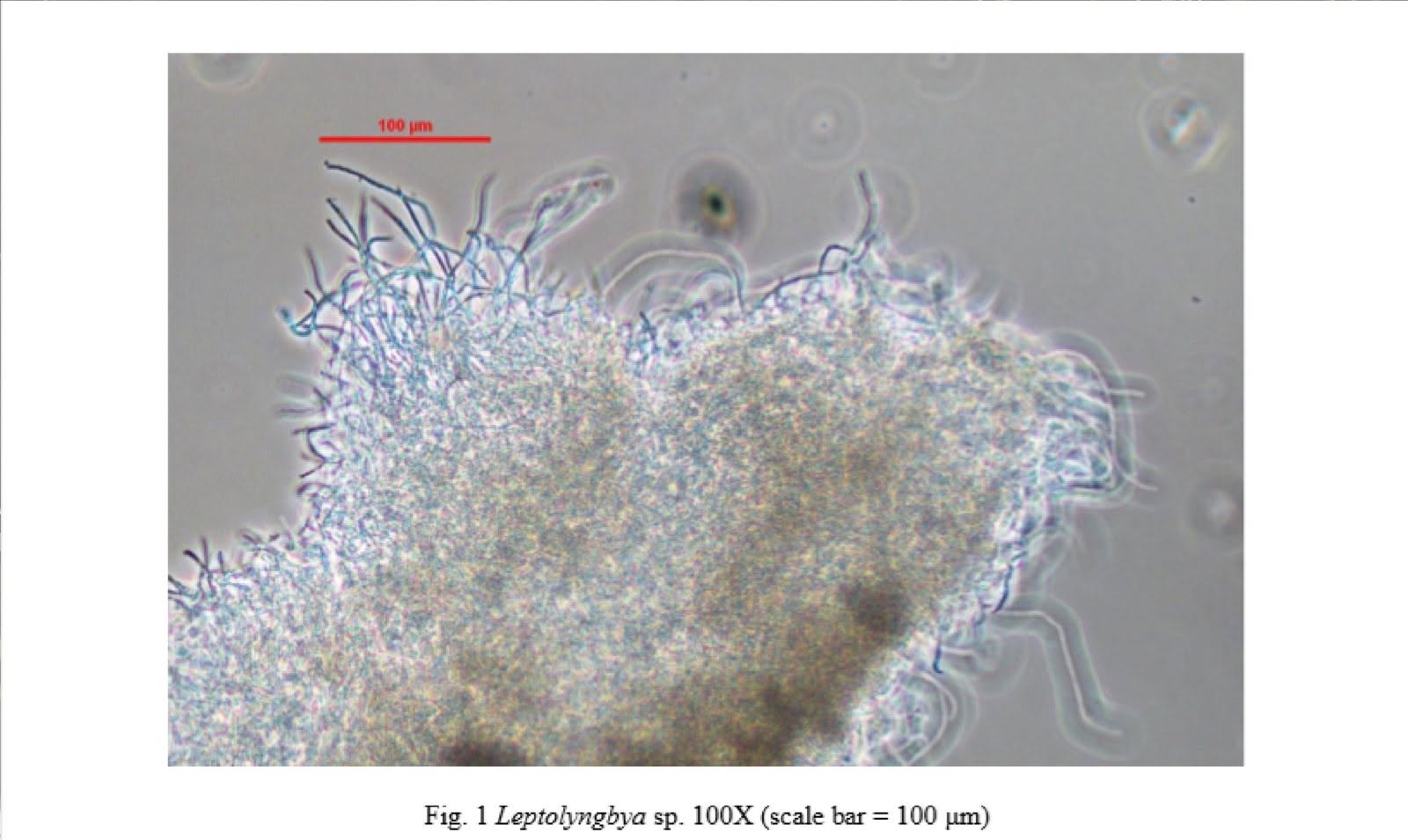
Figure 1. Low-magnification view of biomass reported as Leptolyngbya sp. at 100x. The image shows numerous fine filaments associated with a dense aggregate. The original laboratory label and scale bar are retained.
Identifying and managing Cyanobacteria-dominated Swimming Pool Black Algae Biofilms is vital for preserving pool water quality.
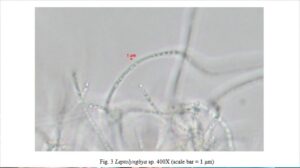
Figure 2. Phase-contrast micrograph of morphology assigned to Leptolyngbya sp. at 400x. The original laboratory figure number and scale bar are retained within the source image.
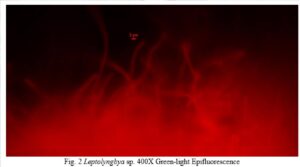
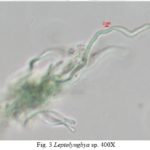
Figure 3. Green-light epifluorescence view of filaments assigned to Leptolyngbya sp. at 400x. Fluorescence supports the presence of photosynthetic pigment but is not independently diagnostic at genus level. The original laboratory figure number is retained within the source image.
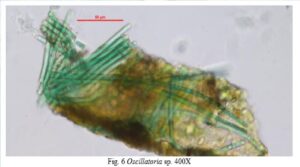
Figure 4. Micrograph of filamentous morphology assigned to Oscillatoria sp. at 400x. The original laboratory figure number and scale bar are retained within the source image.
Future studies should prioritize the understanding of Cyanobacteria-dominated Swimming Pool Black Algae Biofilms to improve public health initiatives.
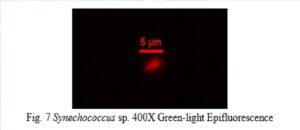
Figure 5. Green-light epifluorescence image of a coccoid cell assigned to Synechococcus sp. at 400x. The original laboratory figure number and scale bar are retained within the source image.
Discussion
Black algae as an operational label for variable Cyanobacteria Found in U.S. Swimming Pools
The principal observation was that visually similar black growths did not yield one consistent morphology-based taxonomic profile. Each specimen contained cyanobacteria, but the reported genera differed among sites. This finding is consistent with the ecological expectation that biofilm composition reflects local inocula and environmental selection rather than a single globally uniform organism.
Understanding the variability of cyanobacteria found in U.S. swimming pools is essential for effective management.
Awareness and management of Cyanobacteria-dominated Swimming Pool Black Algae Biofilms are crucial for recreational pool safety.
The term cyanobacteria-dominant biofilm community is more defensible than treating black algae as a formal taxon. In the Atlantic Beach sample, reported diatoms, green algae, a dinoflagellate, and chlorophyte cells occurred alongside dominant filamentous cyanobacteria. Biofilm matrices can harbor phylogenetically diverse organisms and create microenvironments different from the bulk water [1-4].
Implications for pool management
Recognition of a surface-associated biofilm has practical implications. Bulk-water disinfectant concentration does not alone describe exposure within an extracellular matrix. Mechanical disruption may improve oxidant access. Factors such as roughness, pores, coating defects, low-shear zones, and accumulated deposits may increase opportunities for attachment.
Management strategies should consider the unique challenges posed by cyanobacteria found in U.S. swimming pools.
Taxonomic and toxicological interpretation Cyanobacteria-dominated black algae biofilms
Morphological microscopy is useful for screening and documenting community structure. However, cyanobacterial taxonomy can be difficult when based solely on phenotype [8-10]. Genus assignments in this investigation should be regarded as provisional. Species identity, functional genes, nitrogen fixation, and toxin-production capacity cannot be inferred reliably from genus names alone. Molecular sequencing and toxin-gene analysis would be required to resolve those questions [11].
Research on the dynamics of Cyanobacteria-dominated Swimming Pool Black Algae Biofilms can lead to advancements in pool maintenance practices.
Investigating the cyanobacteria found in U.S. swimming pools can uncover their toxin-producing potential.
The microcystin/nodularin assay was negative at the laboratory’s reporting limit. The two numerical responses below 0.15 ng/mL are not confirmed detections. Moreover, the analyzed material was biomass rather than drinking water, so comparison with drinking-water health advisory concentrations would not constitute a direct exposure assessment. The result neither demonstrates toxin production nor excludes compounds not measured by the assay.
Relationship to subsequent research
These Florida observations predated recent peer-reviewed pool-specific studies. However, they were not originally published through peer review. They should therefore be understood as an early, independently documented field investigation rather than a substitute for controlled taxonomic or ecological research.
Limitations
Future studies should focus on methods to effectively monitor cyanobacteria found in U.S. swimming pools.
Future research should focus on the management of Cyanobacteria-dominated black algae.
The presence of Cyanobacteria-dominated Swimming Pool Black Algae Biofilms indicates the need for effective monitoring and management strategies.
The study has substantial limitations. It included only three convenience samples and did not use a prospective sampling plan, negative controls, longitudinal follow-up, standardized surface-area collection, or complete water-chemistry and hydraulic measurements. Microscopy-based identifications were not confirmed by culture, 16S rRNA sequencing, amplicon sequencing, metagenomics, or whole-genome sequencing.
Recommendations for future research
A larger study should enroll pools across multiple regions and collect replicate biomass, adjacent surface controls, bulk water, and filter samples using a standardized protocol. Recorded covariates should include surface material and condition, indoor or outdoor status, temperature, pH, free and combined chlorine, cyanuric acid, alkalinity, calcium hardness, nutrients, flow, maintenance history, oxidant exposure, and recent treatments. Microscopy should be paired with 16S rRNA amplicon sequencing, shotgun metagenomics where feasible, culture-based isolation, pigment analysis, and quantitative assays for relevant toxin genes and toxins. Repeated sampling would help distinguish stable community patterns from transient colonization and test whether community composition predicts treatment response.
Prioritizing the study of Cyanobacteria-dominated black algae is essential for effective pool management.
Efforts to mitigate the impact of cyanobacteria found in U.S. swimming pools must prioritize public education.
Conclusion
The presence of cyanobacteria found in U.S. swimming pools raises important questions about water quality.
Understanding the implications of Cyanobacteria-dominated Swimming Pool Black Algae Biofilms is essential for ensuring safe recreational water activities.
Surface-associated growths called black algae in three Florida swimming pools contained cyanobacterial morphotypes, but the reported community composition varied among sites. One specimen also contained multiple eukaryotic phototrophs, supporting interpretation as a mixed, cyanobacteria-dominant biofilm. A microcystin/nodularin ELISA of one biomass sample was reported as not detected above 0.15 ng/mL. These exploratory findings do not establish species identity, prevalence, toxin production, or health risk. They provide a documented basis for larger molecularly resolved studies of persistent phototrophic biofilms in chlorinated recreational water systems.
Understanding how to manage cyanobacteria found in U.S. swimming pools is critical for public safety.
Declarations
Ethics statement
Research on cyanobacteria found in U.S. swimming pools must also consider potential economic impacts.
The investigation involved environmental specimens collected from swimming-pool surfaces and did not involve human participants, personal health information, or vertebrate animals.
The management of Cyanobacteria-dominated Swimming Pool Black Algae Biofilms is critical for protecting public health in aquatic environments.
The management of Cyanobacteria-dominated black algae is critical for ensuring public health in aquatic environments.
Consent for publication
Cyanobacteria found in U.S. swimming pools can affect recreational water activities and public health.
Not applicable.
Funding
Policies should be developed to address cyanobacteria found in U.S. swimming pools as a public concern.
No external research grant supported this investigation. Laboratory analyses and associated field work were arranged through Aquatic Facility Training and Consultants and collaborating participants.
Addressing challenges associated with Cyanobacteria-dominated Swimming Pool Black Algae Biofilms is essential for sustainable swimming pool management.
Competing interests
Research collaboration is crucial in understanding cyanobacteria found in U.S. swimming pools.
Research collaboration is essential for understanding the implications of Cyanobacteria-dominated black algae.
The author provides aquatic-facility education, consulting, and industry training. No commercial product was evaluated in this study, and no treatment-efficacy conclusion is presented.
Author contributions
Cyanobacteria found in U.S. swimming pools represent a growing field of inquiry for environmental scientists.
R.S. conceived the field investigation, coordinated sampling and laboratory submissions, assembled and interpreted the surviving records, and prepared the manuscript. Laboratory identifications and analyses are attributed separately in the Acknowledgments and are not represented as having been performed by the author.
Understanding Cyanobacteria-dominated black algae can provide insights for environmental scientists.
Research on Cyanobacteria-dominated Swimming Pool Black Algae Biofilms is growing, highlighting their ecological importance in aquatic systems.
Data availability
Ss=”rank-math-highlight” style=”background-color: #fee894″>Strategies to combat cyanobacteria found in U.S. swimming pools must focus on sustainable practices.
The surviving microscopy images, partial PTOX report, and 2018 ELISA worksheet are held by the author and may be made available to editors or qualified researchers on reasonable request, subject to removal of facility-identifying information. The complete original PTOX narrative report is no longer recoverable because of file corruption; the laboratory’s retained copy is incomplete.
Similar article here: Researchgate.net
Future studies should explore the health implications of cyanobacteria found in U.S. swimming pools.
Declaration of generative AI and AI assisted technologies in the writing process
Strategies to effectively manage Cyanobacteria-dominated Swimming Pool Black Algae Biofilms are necessary to protect recreational water quality.
During preparation of this manuscript, the author used OpenAI ChatGPT and Codex to assist with organization, language editing, reference checking, and document formatting. The author reviewed and edited the resulting text, verified it against the surviving primary records, and takes full responsibility for the content of the publication.
Similar Article: Field Sampling of Swimming Pool “Black Algae”
Addressing challenges associated with Cyanobacteria-dominated black algae is vital for sustainable pool management.
Acknowledgments
The study underscores the need for ongoing research into cyanobacteria found in U.S. swimming pools.
The author thanks Edward J. Phlips, PhD, University of Florida, for early microscopy and scientific guidance; Fred Singleton, PhD, for field collection and specimen handling at the Atlantic Beach site; Lisa Arquilla Dodge for facilitating access to the Atlantic Beach facility; Amanda Foss, MS, Andrew Chapman, MS, Kamil Cieslik, and GreenWater Laboratories/CyanoLab for cyanobacterial screening, microscopy, analytical work, and preservation of surviving records; Darla Goeres, PhD, for discussion of biofilm variability and study design; Roy D. Vore, PhD, for technical feedback on the applied investigation; and Isaac Miller, PhD, for editorial review of the author’s earlier algae publication. Acknowledgment does not imply endorsement of every interpretation in this manuscript.
References
Future research should continue to explore the dynamics of Cyanobacteria-dominated Swimming Pool Black Algae Biofilms in recreational environments.
Additional resources are available for understanding cyanobacteria found in U.S. swimming pools.
-
- Flemming HC, Wingender J. The biofilm matrix. Nature Reviews Microbiology. 2010;8:623-633. doi:10.1038/nrmicro2415.
- Stewart PS, Costerton JW. Antibiotic resistance of bacteria in biofilms. The Lancet. 2001;358:135-138. doi:10.1016/S0140-6736(01)05321-1.
- Bridier A, Briandet R, Thomas V, Dubois-Brissonnet F. Resistance of bacterial biofilms to disinfectants: a review. Biofouling. 2011;27:1017-1032. doi:10.1080/08927014.2011.626899.
- Stal LJ. Cyanobacterial mats and biofilms. In: Whitton BA, editor. Ecology of Cyanobacteria II. Dordrecht: Springer; 2012. p. 65-125. doi:10.1007/978-94-007-3855-3_4.
- Lewin RA. Black algae. Journal of Applied Phycology. 2006;18:699-702. doi:10.1007/s10811-005-9018-2.
- Maestri C, Hebert RL, Di Martino P. Biofilm associated with pigmented areas on a waterproofing coating surface. AIMS Microbiology. 2025;11:74-86. doi:10.3934/microbiol.2025005.
- Christie-Oleza JA, Aguilo-Ferretjans MM, Obrador-Viel T, et al. Black algae biofilms in recreational swimming pools: causes and solutions. Environmental Technology & Innovation. 2025;40:104664. doi:10.1016/j.eti.2025.104664.
- Hernandez-Marine M, Clavero E, Roldan M. Microscopy methods applied to research on cyanobacteria. Limnetica. 2004;23:179-186. doi:10.23818/limn.23.16.
- Komarek J, Anagnostidis K. Cyanoprokaryota 2 Teil Oscillatoriales. Munich: Elsevier/Spektrum; 2005.
- Bellinger EG, Sigee DC. Freshwater Algae: Identification, Enumeration and Use as Bioindicators. 2nd ed. Chichester: Wiley; 2015.
Further studies will enhance the knowledge of cyanobacteria found in U.S. swimming pools.
-
- Rantala A, Fewer DP, Hisbergues M, et al. Phylogenetic evidence for the early evolution of microcystin synthesis. Proceedings of the National Academy of Sciences USA. 2004;101:568-573. doi:10.1073/pnas.0304489101.
- U.S. Environmental Protection Agency. Drinking Water Health Advisory for the Cyanobacterial Microcystin Toxins. EPA-820R15100. Washington, DC: U.S. EPA; 2015.
- Chorus I, Welker M, editors. Toxic Cyanobacteria in Water: A Guide to Their Public Health Consequences, Monitoring and Management. 2nd ed. Boca Raton: CRC Press; 2021.
Public health guidelines should address cyanobacteria found in U.S. swimming pools to ensure safety.
Public health guidelines should specifically address the management of Cyanobacteria-dominated black algae.
- Stankowitz R. Swimming Pool Black Algae. ResearchGate; 2019. Available from: https://www.researchgate.net/publication/333555952_Swimming_Pool_Black_Algae.
- Stankowitz R. How to Get Rid of Swimming Pool Algae. Independently published; 2021. ISBN 9798702035543.
Figure provenance
Efforts to manage cyanobacteria found in U.S. swimming pools will require collaboration across sectors.
Figures 1-5 are surviving laboratory micrographs supplied to Aquatic Facility Training and Consultants during the 2018 investigation. The embedded taxonomic labels reproduce the laboratory-attributed morphological assignments. Scale bars and magnifications are retained as shown in the source images.
Cyanobacteria found in U.S. swimming pools serve as a reminder of the importance of water quality management.
Cyanobacteria-dominated black algae found in U.S. swimming pools serve as a reminder of water quality management’s importance.
Understanding the implications of cyanobacteria found in U.S. swimming pools is essential for future research.