
Chlorine Gas Cloud Injuries at Public Pools: The Role of Circulation and Safety Interlocks
Chlorine Gas Cloud Injuries at Public Pools can lead to serious health concerns and need to be addressed with proper safety protocols.
One of the most effective safety measures used in commercial aquatic facilities is an electrical interlock between the circulation pump and chemical feed equipment.
These interlocks ensure that chemical feeders cannot operate unless the pool circulation system is actively moving water.
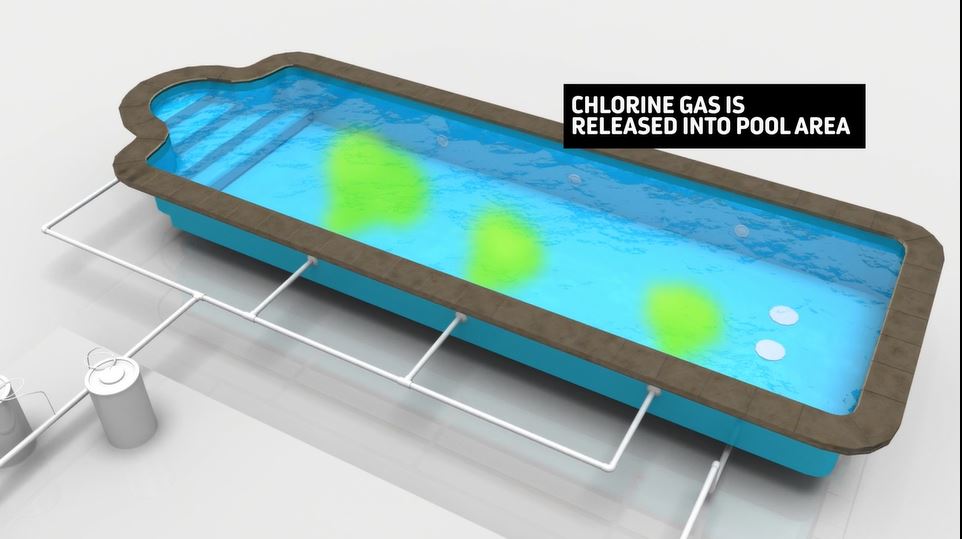
When circulation stops—due to a pump failure, power outage, or maintenance shutdown—the interlock disables the chemical feeders. This prevents chemicals from accumulating inside the plumbing system and reduces the risk of incompatible chemical mixing.
According to aquatic facility safety guidelines published by organizations such as the Centers for Disease Control and Prevention (CDC) and the Model Aquatic Health Code (MAHC), maintaining proper circulation and automated safety controls is essential for safe pool operation.
Chlorine Gas Cloud Injuries at Public Pools highlight the importance of maintaining safety equipment and protocols.
Industry Efforts to Improve Chemical Safety
At the World Aquatic Health Conference, industry leaders frequently address safety concerns related to recreational water facilities.
One important effort to address accidental chemical exposure has been led by a task force associated with the American Chemistry Council (ACC), which produced educational materials designed to help pool operators understand how these incidents occur and how they can be prevented.
Kevin Boyer, Chief Operating Officer of Poolsure, has been actively involved in this effort.
Poolsure provides water treatment services to thousands of commercial aquatic facilities across the southern United States, giving the company extensive experience with real-world pool operations.
Boyer explains that many chlorine gas exposure incidents occur not because facilities lack safety equipment, but because existing safety mechanisms are bypassed or improperly configured.
In some cases, operators temporarily override safety switches in order to keep pools open during equipment issues. In other situations, safety interlocks were never installed correctly.
Understanding the potential for Chlorine Gas Cloud Injuries at Public Pools is essential for all operators.
Yet the solution is often surprisingly simple.
Many facilities can install the appropriate safety interlock for less than a few hundred dollars, making it one of the most cost-effective safety improvements available for commercial pools.
Why Education Is Critical
Chlorine Gas Cloud Injuries at Public Pools underscore the necessity of comprehensive training programs.
Preventing chemical exposure incidents ultimately comes down to operator education and proper training.
Swimming pool equipment systems—including pumps, chemical feeders, controllers, and safety interlocks—must be installed and maintained correctly to operate safely.
By mitigating the risks of Chlorine Gas Cloud Injuries at Public Pools, facilities can create safer environments.
Without proper training, operators may not fully understand how chemical feed systems interact with circulation systems or how equipment malfunctions can create hazardous conditions.
Education programs designed for aquatic professionals emphasize these safety principles.
Chlorine Gas Cloud Injuries at Public Pools – The Importance of Professional Pool Operator Training
Operating a swimming pool safely requires knowledge of water chemistry, circulation systems, filtration equipment, and chemical feed controls.
Many aquatic professionals responsible for pool operation pursue Certified Pool Operator (CPO) certification, a nationally recognized training program that provides instruction in recreational water safety and facility management.
Certified Pool Operator training covers topics such as:
-
chemical dosing and disinfection chemistry
-
circulation system operation
-
equipment safety and automation
-
regulatory compliance and health codes
-
emergency response procedures
Training programs such as the Certified Pool Operator (CPO) course offered through Aquatic Facility Training & Consultants help pool operators understand the science and safety principles required to prevent chemical accidents.
Addressing Chlorine Gas Cloud Injuries at Public Pools is vital for the health and safety of patrons.
Learn more about Certified Pool Operator certification classes here:
https://cpoclass.com/cpo-pool-operator-certification/
Sharing Safety Information Across the Industry
Educational videos and safety materials produced by organizations such as the American Chemistry Council have been created specifically to help pool professionals recognize the warning signs of chemical feed problems.
Industry leaders encourage aquatic facility managers, service companies, and training programs to share these resources widely.
The goal is simple:
The prevention of Chlorine Gas Cloud Injuries at Public Pools requires diligence and adherence to safety practices.
Reduce accidental chemical exposure incidents by ensuring that pool operators understand how these systems work and how to prevent dangerous chemical mixing.
In many cases, prevention requires nothing more than properly installed safety interlocks and operators who understand why those safety systems should never be bypassed.
Frequently Asked Questions About Pool Chemical Safety
What causes Chlorine Gas Cloud Injuries at Public Pools?
Preventing Chlorine Gas Cloud Injuries at Public Pools starts with understanding the chemical interactions involved.
Most incidents occur when chlorine and acid mix due to equipment malfunctions, loss of water flow, or improperly configured chemical feed systems.
Are chlorine gas cylinders commonly used in pools today?
Most modern commercial pools use liquid chlorine or other chlorine compounds rather than compressed chlorine gas cylinders.
How can chlorine gas exposure be prevented?
Properly installed safety interlocks between circulation pumps and chemical feeders help prevent chemicals from mixing when water flow stops.
Effective training can significantly reduce the risk of Chlorine Gas Cloud Injuries at Public Pools.
What training helps pool operators prevent chemical accidents?
Many aquatic professionals complete Certified Pool Operator (CPO) training, which teaches safe chemical handling, circulation system operation, and recreational water health standards.
Related Articles
That Chlorine Smell
Understanding Pool Biofilms and Black Algae
Microcystins and Cyanobacteria in Swimming Pools
About the Author
Rudy Stankowitz is a Certified Pool Operator (CPO) instructor and the founder of Aquatic Facility Training & Consultants. He provides professional Certified Pool Operator (CPO) training for pool service professionals, aquatic facility managers, and public health personnel through both online and in-person courses. Rudy is widely recognized within the swimming pool industry for his research into pool water chemistry and microbiology, including field investigations into cyanobacteria biofilms commonly referred to as “black algae.”
Rudy emphasizes the importance of awareness regarding Chlorine Gas Cloud Injuries at Public Pools in training sessions.
Learn more about Certified Pool Operator certification classes at:
https://cpoclass.com/cpo-pool-operator-certification/

Could a Deadly Chlorine Gas Cloud Happen at Your Apartment Complex Pool
Liquid Chlorine pH
Does Chlorine Lock Exist?




















I am against the use of chlorine in swimming pools because it leads to irritation or even severe allergic reactions in many people.
use of chlorine in water treatment plays a very important role. you are correct in noting that it is not perfect, however actual allergic reactions to chlorine are rare. when handled and utilized correctly, risks are minimized and the potential for accidents is greatly reduced.
The bathers’ safety should come first. The treatment of the pools with chlorine must meet all requirements in order to avoid any negative impact on us.
Agreed!
oh wow, very informative article. thanks for sharing
wow I’ve never heard of this before!! very interesting to learn about!
This is the first time that I have heard of Chlorine gas cloud. Thanks for the helpful information.
Great to know. It’s my first time to read about this type of accident. Thank you for sharing.
informative useful sharing, enjoyed my read & appreciate some useful info learnt from here, thanks for sharing this. cheers, siennylovesdrawing.wordpress.com
This was a really informative article, although I don’t frequent the pool anymore, it’s nice to see there are things happening to protect the patrons 🙂
I always have something to learn from you. Not yet started my class as I said before. I have a few questions. Hope to write to you soon. Thanks.
I guess you learn something new everyday. My kids enjoy swimming, I wish there was a place I could take them more.
It’s reasons like this that my husband, who is a biochemist, prefers to do our pool.
I don’t like that chlorine smell at all. It makes me puke. It’s good to have a personal pool for health and other safeties.
Being in a pool is making us vulnerable that’s why it is important the 360 safety of everyone.
Pingback: Preparing Your Pool For a Hurricane - Pool Operator Talk News🗞
Pingback: Pool Rip-offs & Explosions - Pool Operator Talk News🗞